
The Supreme Court Battle Over Trans Athletes: A Turning Point in the Fight for Equality
In a landmark moment that transcends the realm of sports, the Supreme Court is poised to hear two pivotal cases concerning transgender athletes. These cases, brought forth by a transgender girl in West Virginia and a transgender woman in Idaho, challenge the restrictions placed on their ability to participate in women’s school sports teams. At first glance, the cases appear to center on the fairness of transgender individuals competing in gender-segregated sports. However, the implications reach far beyond the playing field, touching on fundamental issues of equality, identity, and civil rights in America.
Read the full article: Supreme Court Battle Over Trans Athletes Is About So Much More Than Sports (Mother Jones)
Understanding the Cases: Key Details and Legal Context
These cases arise from two separate legal battles challenging state-level policies that restrict transgender athletes’ participation in sports consistent with their gender identity. In West Virginia, a transgender girl has taken a stand against a state law that prohibits her from joining her school’s women’s sports teams. Similarly, in Idaho, a transgender woman is contesting a ban that prevents her from competing in women’s college sports. Both cases argue that these policies violate the Equal Protection Clause of the Fourteenth Amendment, which is designed to ensure no individual is denied equal protection under the law.
The legal discourse surrounding these cases is deeply intertwined with broader questions about transgender rights, identity recognition, and the interpretation of ‘equal protection.’ The Supreme Court’s decision will likely set a precedent that could either affirm or undermine the rights of transgender individuals across the nation.
Progressive Analysis: Beyond the Headlines
At its core, this issue is not just about sports—it’s about affirming the humanity and dignity of transgender individuals. The progressive movement has long advocated for the inclusion and protection of marginalized communities. The cases being heard by the Supreme Court are a litmus test for our society’s commitment to these values.
Historically, sports have often served as a microcosm of larger societal issues, reflecting the struggles and triumphs of various civil rights movements. The battle for transgender inclusion in sports is no different. It echoes the struggles faced by women, people of color, and other marginalized groups who have fought for their rightful place in society.
Connecting to Broader Progressive Movements
This Supreme Court battle is emblematic of the broader fight for LGBTQ+ rights. For decades, the LGBTQ+ community has battled discrimination and sought recognition and equality under the law. The fight for transgender rights is a critical part of this ongoing struggle. It challenges us to reconsider our understanding of gender, identity, and fairness.
Moreover, this issue intersects with other progressive causes, such as gender equality and anti-discrimination efforts. It compels us to question who gets to define fairness and inclusion and how these definitions impact the lives of those at the margins.
Implications for the Progressive Movement
The outcome of these cases could have far-reaching implications for the progressive movement. A decision in favor of the transgender athletes could bolster efforts to secure comprehensive legal protections for transgender individuals and inspire further activism. It would signal a rejection of discriminatory practices and affirm the principle that everyone deserves equal opportunities, regardless of their gender identity.
On the other hand, a ruling against these athletes could embolden anti-transgender legislation and set back efforts to achieve full equality. It would underscore the need for continued advocacy and activism to protect and advance the rights of transgender people.
Different Perspectives: Navigating the Debate
While the progressive stance strongly supports transgender inclusion, it is important to acknowledge the diverse perspectives surrounding this issue. Some argue that transgender athletes have physical advantages that could undermine fair competition. Others express concerns about the implications for women’s sports and the potential for unintended consequences.
However, these arguments often overlook the heart of the issue: the right of transgender individuals to be recognized and treated as equals. Many experts and advocates emphasize that policies can be developed to ensure fair competition while also respecting the rights and identities of transgender athletes. This balanced approach is essential for fostering an inclusive society.
Reflection and Call to Action
As the Supreme Court prepares to hear these landmark cases, the stakes could not be higher. This is a defining moment for the progressive movement and for the nation as a whole. It is a chance to affirm our commitment to equality, inclusion, and human dignity. It is a moment to stand in solidarity with transgender individuals and ensure their voices are heard and respected.
As individuals and as a community, we must continue to advocate for policies that promote fairness, understanding, and inclusion. We must challenge stereotypes and misconceptions and work towards a world where everyone, regardless of their gender identity, can live authentically and without fear of discrimination.
The path to equality is long and often fraught with challenges, but with collective effort and unwavering commitment, progress is not only possible—it is inevitable. Let us seize this moment to push for a more inclusive and just society for all.
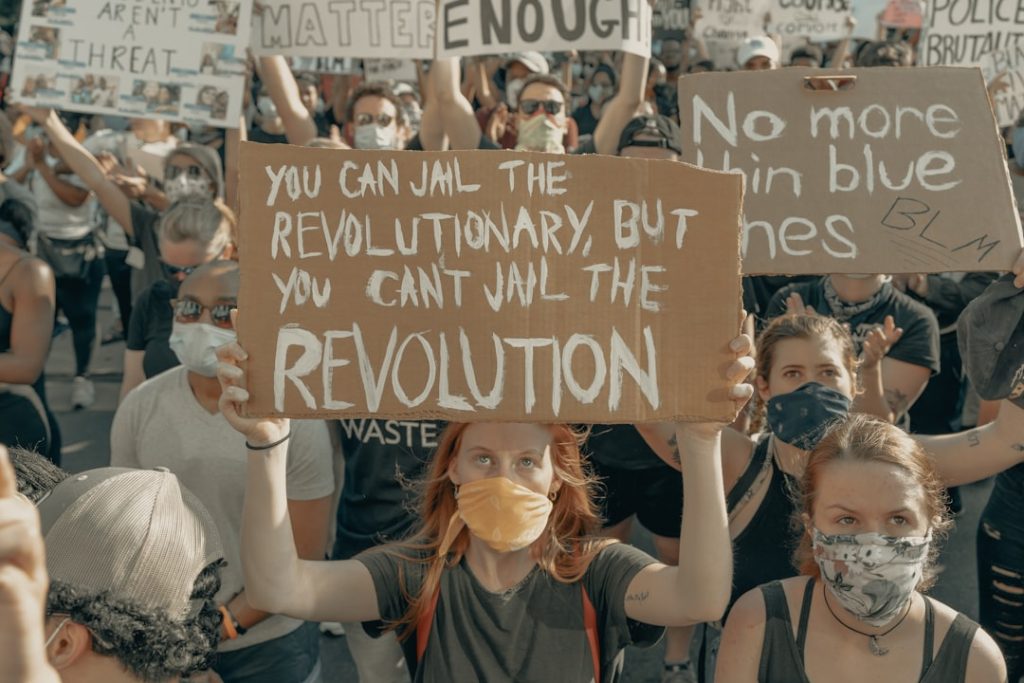
Photo by Clay Banks on Unsplash
Stay Connected with Flamr
Don’t forget to follow Flamr on social media!