
Supreme Court Battle Over Trans Athletes: A Crucial Turning Point for Equality
In what is shaping up to be a landmark moment for civil rights and equality in the United States, the Supreme Court is poised to hear a pair of cases that delve into the inclusion of transgender athletes in school sports. These cases, hailing from West Virginia and Idaho, have captured national attention and ignited a fierce debate over fairness, identity, and the values that underpin our society. As we stand at this pivotal juncture, it is crucial to understand not just the legal implications of these cases but also their broader significance in the ongoing struggle for equality and inclusion.
The Cases at Hand
On Tuesday, the Supreme Court will hear arguments from a transgender girl in West Virginia and a transgender woman in Idaho, both of whom are fighting for the right to participate on women’s sports teams. These cases challenge existing state laws that restrict transgender athletes’ participation in sports, arguing that such restrictions violate the Equal Protection Clause of the Fourteenth Amendment.
Central to the debate is the question of fairness. Critics argue that allowing transgender women and girls to compete in women’s sports could create an uneven playing field due to physiological differences. However, proponents emphasize the right to inclusion and the importance of recognizing gender identity as a fundamental aspect of an individual’s identity.
Read the full article: Supreme Court Battle Over Trans Athletes Is About So Much More Than Sports (Mother Jones)
Progressive Analysis: Beyond the Surface
While these cases are ostensibly about sports, they tap into much deeper issues of identity, recognition, and the fight for equal rights. For progressive movements, supporting the rights of transgender individuals goes hand in hand with advocating for a society where everyone can live authentically, free from discrimination and prejudice.
The Broader Context
Historically, the struggle for civil rights in the United States has been marked by landmark legal battles that have challenged existing norms and expanded the definition of equality. From Brown v. Board of Education to Obergefell v. Hodges, the Supreme Court has played a pivotal role in shaping the nation’s approach to civil rights. The current cases involving transgender athletes are part of this continuum, challenging us to rethink our understanding of gender and inclusion.
The progressive movement has long championed the rights of marginalized groups, advocating for policies and practices that promote diversity, equity, and inclusion. Supporting transgender athletes is a natural extension of these values, recognizing that sports serve as a microcosm of society where issues of fairness and identity play out in vivid detail.
Implications for the Progressive Movement
The outcome of these Supreme Court cases will have far-reaching implications for the progressive movement. A ruling in favor of the transgender athletes could set a powerful precedent, affirming the rights of transgender individuals and reinforcing the principle that everyone deserves equal protection under the law, regardless of gender identity.
Moreover, such a ruling could energize progressive activists and organizations, providing momentum for further advocacy in areas such as healthcare access, employment rights, and anti-discrimination protections for transgender individuals.
Different Perspectives
It’s important to acknowledge the diverse perspectives surrounding this issue. While many within the progressive movement support the inclusion of transgender athletes, there are others who express concerns about fairness and competitive balance in sports. Engaging in open and respectful dialogue is essential to finding common ground and advancing policies that reflect our shared values of equality and justice.
- Supporters argue that inclusivity and respect for gender identity should be paramount, emphasizing the social benefits of sports participation for all students.
- Opponents often focus on perceived competitive advantages and call for solutions that maintain fairness in sports.
Reflection and Call to Action
As we await the Supreme Court’s decision, it is vital for the progressive community to continue advocating for the rights of transgender individuals. This moment presents an opportunity to reaffirm our commitment to equality and to ensure that all people, regardless of gender identity, have the opportunity to participate fully in society.
We must also continue to educate ourselves and others about the complexities of gender identity, challenging misconceptions and fostering an environment of understanding and acceptance. By doing so, we can help create a world where everyone is empowered to live authentically and without fear of discrimination.
In the words of activist and writer Audre Lorde, “It is not our differences that divide us. It is our inability to recognize, accept, and celebrate those differences.” As we stand on the brink of a potentially transformative moment for civil rights, let us commit to celebrating our diversity and working together to build a more just and inclusive society.
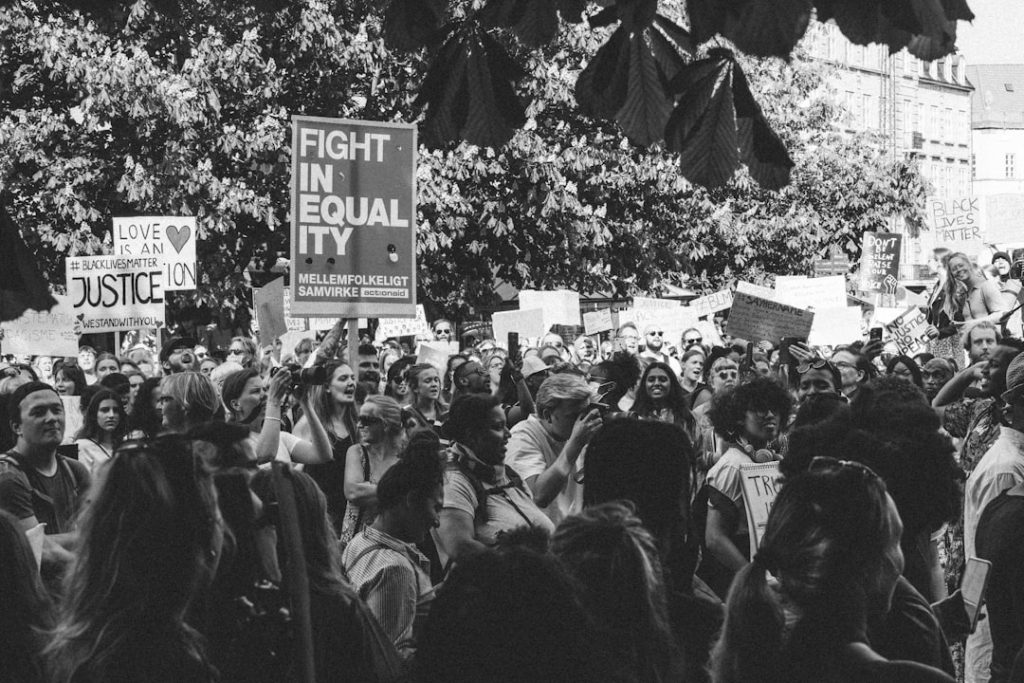
Photo by Jeppe Mønster on Unsplash
Stay Connected with Flamr
Don’t forget to follow Flamr on social media!