
Understanding AIPAC’s Strategic Shift: Analyzing the Retreat from Endorsements and Election Spending
In a world where political influence often shapes the course of nations, the American Israel Public Affairs Committee (AIPAC) has long been a significant player in the U.S. political landscape, especially concerning U.S.-Israel relations. However, recent developments, as reported by The Intercept, indicate a strategic shift in AIPAC’s approach to endorsements and election spending. While at first glance this might seem like a retreat, the reality is far more nuanced and complex. This story matters not just to those directly involved in politics but to anyone who cares about the health of democracy and the broader implications of lobbying in America.
The Story Behind AIPAC’s Retreat
As detailed by The Intercept, AIPAC is pulling back from its traditional methods of influencing elections, namely through direct endorsements and hefty election spending. Traditionally, AIPAC has been known for its aggressive lobbying efforts, often channeling substantial financial resources to candidates who align with its pro-Israel stance. However, this midterm cycle, AIPAC is adopting a quieter approach, opting to wield its influence in less direct ways while still maintaining its overarching goal of keeping Congress favorable to Israel.
Read the full article: AIPAC Is Retreating From Endorsements and Election Spending. It Won’t Give Up Its Influence. (The Intercept)
Progressive Analysis: The Implications of AIPAC’s Shift
Influence Beyond Financial Contributions
AIPAC’s decision to pull back on direct endorsements and election spending signifies a shift from overt financial influence to more subtle forms of power. Despite the retreat in visible spending, AIPAC’s ability to sway political discourse remains robust. This strategic pivot suggests a deeper understanding of the evolving political climate, where voters and candidates alike increasingly scrutinize the influence of lobbying groups.
For progressives, this development is a double-edged sword. On one hand, it is a move towards reducing the direct impact of money in politics—a core progressive value. On the other hand, it underscores the adaptability of influential lobbies like AIPAC, who may still exert considerable sway through other means, such as strategic partnerships, policy advocacy, and informational campaigns.
Connecting to Broader Progressive Movements
The progressive movement has long advocated for transparency and reduced corporate and lobbyist influence in politics. This shift by AIPAC aligns with the movement’s calls for a political system less dominated by financial contributions. However, progressives must remain vigilant. The move to less transparent forms of influence could complicate efforts to track and counter lobbying power in Congress.
Historically, movements such as campaign finance reform and grassroots organizing have sought to empower citizens over special interests. AIPAC’s strategic retreat offers an opportunity to reinvigorate these efforts, emphasizing the need for continued advocacy and reform.
Implications for the Progressive Movement
This strategic shift by AIPAC could have several implications for the progressive movement:
- Strengthening Campaign Finance Reform: This moment presents an opportunity to push for comprehensive reform that addresses not just financial contributions but the broad spectrum of lobbying influence.
- Enhancing Transparency: Progressives can advocate for increased transparency in political lobbying, ensuring that citizens are aware of all forms of influence shaping policy decisions.
- Empowering Grassroots Movements: With a powerful lobbying entity like AIPAC shifting strategies, grassroots movements can gain momentum, mobilizing local communities to demand accountability and fairness in political processes.
Different Perspectives on AIPAC’s Strategy
While the progressive perspective sees both opportunities and challenges in AIPAC’s shift, other viewpoints provide additional context:
- Conservative Viewpoints: Some conservatives may view AIPAC’s move as a necessary adaptation to the changing political landscape, where direct financial influence is increasingly scrutinized. They might argue that AIPAC’s continued influence is crucial for maintaining strong U.S.-Israel relations.
- Neutral Observers: Political analysts who adopt a neutral stance might see this as a natural evolution of lobbying strategies, highlighting the sophisticated methods organizations use to maintain influence without direct endorsements.
Reflection and Call to Action
In the face of AIPAC’s strategic retreat, the progressive movement must remain proactive and vigilant. While the reduction in direct election spending is a step forward, it’s essential to ensure that indirect influences do not undermine democratic processes. This calls for renewed efforts in campaign finance reform, transparency advocacy, and grassroots mobilization to safeguard the integrity of our political system.
We invite readers and activists alike to engage in conversations about the role of lobbying in politics and to advocate for a political landscape that values transparency, accountability, and the voices of everyday citizens over special interests. Together, we can work towards a future where democracy thrives on genuine representation and equitable influence.
Read the full article: AIPAC Is Retreating From Endorsements and Election Spending. It Won’t Give Up Its Influence. (The Intercept)
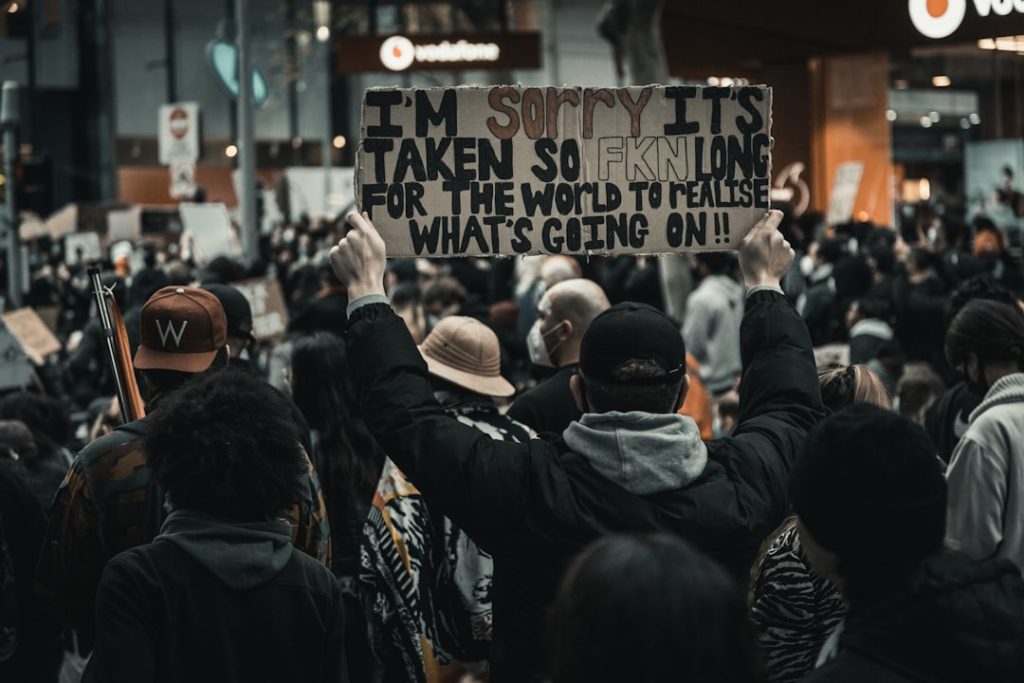
Photo by Arctic Qu on Unsplash
Stay Connected with Flamr
Don’t forget to follow Flamr on social media!